Automotive
Fachmann/Sectors/Automotive
Sector / Automotive

Stop the machine in time
without stopping production.

ISO 13849-1ISO 10218-2ISO 14119ISO 13855ISO 13851ISO 3691-4

An automotive plant concentrates presses closing tons onto a die, machining centres surrounded by chips and coolant, robots moving at high speed and autonomous vehicles crossing aisles shared with people. The risk lies in every intervention: die change, tool change, robot adjustment, removing a jammed part. Fachmann integrates interlocks, presence detection and safety logic under a single technical interlocutor, aligned to ISO 13849-1 and the standards for presses, machine tools, robots and autonomous vehicles.

Typical applications

Applications
in Automotive.

Stamping · Machining · Robotic welding and assembly · In-plant logistics with AGVs

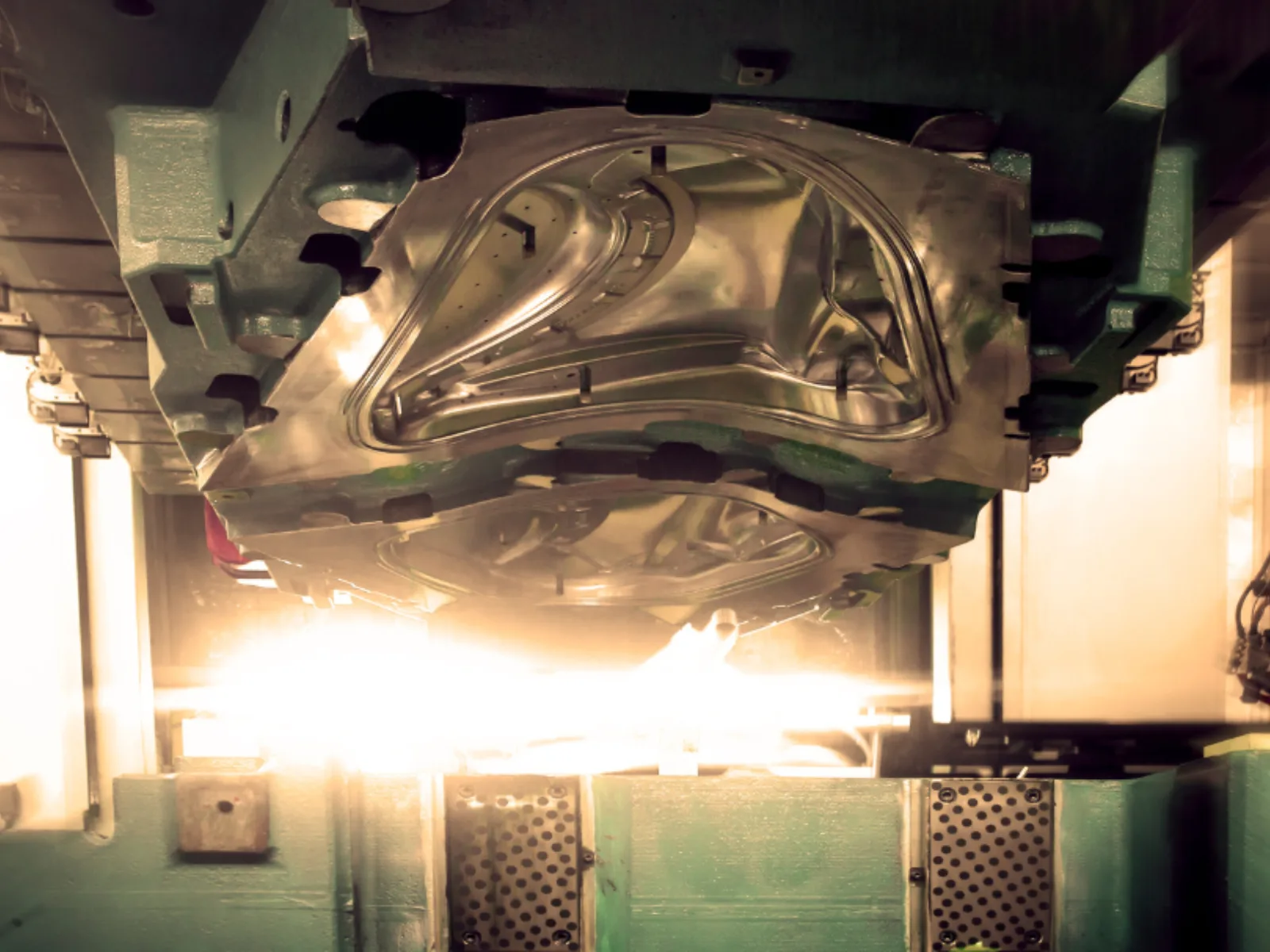
Automotive sheet metal stamping die mounted in a press
01
01 / 04

Presses and stamping lines

The problem

On a press, the point of operation is centimetres from the hands during manual loading and unloading. A fixed guard on the front slows every cycle, and a simple start button is operated with one hand while the other is free to enter the danger zone. During a die change, staff work inside the machine: if someone energises it from the panel while a person is between the platens, the accident is severe.

The Fachmann solution
PILZbackbone

PSENopt II Type 4 safety light curtains, PLe per ISO 13849-1, on the loading side: 14 mm resolution for finger protection or 30 mm for hand protection, with no dead zones (except at the 150 mm height). The operator loads the part without opening a guard, and the press does not close while a hand is in the field. Blanking for parts or tools that pass through the field in a fixed position, and cascading to protect several sides of the machine. They withstand shocks up to 50 g and operate from -25 to +60 °C. The PNOZsigma relay, with time-delayed contacts from 0.04 to 300 s, handles stop category 1 and releases the guards only once the press has finished braking (SIL 3, PLe, Cat. 4).

IDEM SAFETYdifferentiator

Two-hand control: forces both hands to stay outside the point of operation on manually cycled presses, PLe per ISO 13849-1 and ISO 13851. Trapped key interlocking for die change: the access sequence is enforced mechanically, independent of electronics, and the key that opens the guard cannot be in the panel at the same time. 4000 N RFID Guard Locking for side and rear doors.

Featured families
  • PILZ PSENopt II Type 4 safety light curtains (finger and hand)
  • PILZ PNOZsigma safety relays
  • IDEM SAFETY Two-hand control
  • IDEM SAFETY Trapped key interlocking
  • IDEM SAFETY RFID Guard Locking
Standards
ISO 16092-1IEC 61496ISO 13855ISO 13851ISO/TS 19837ISO 13849-1
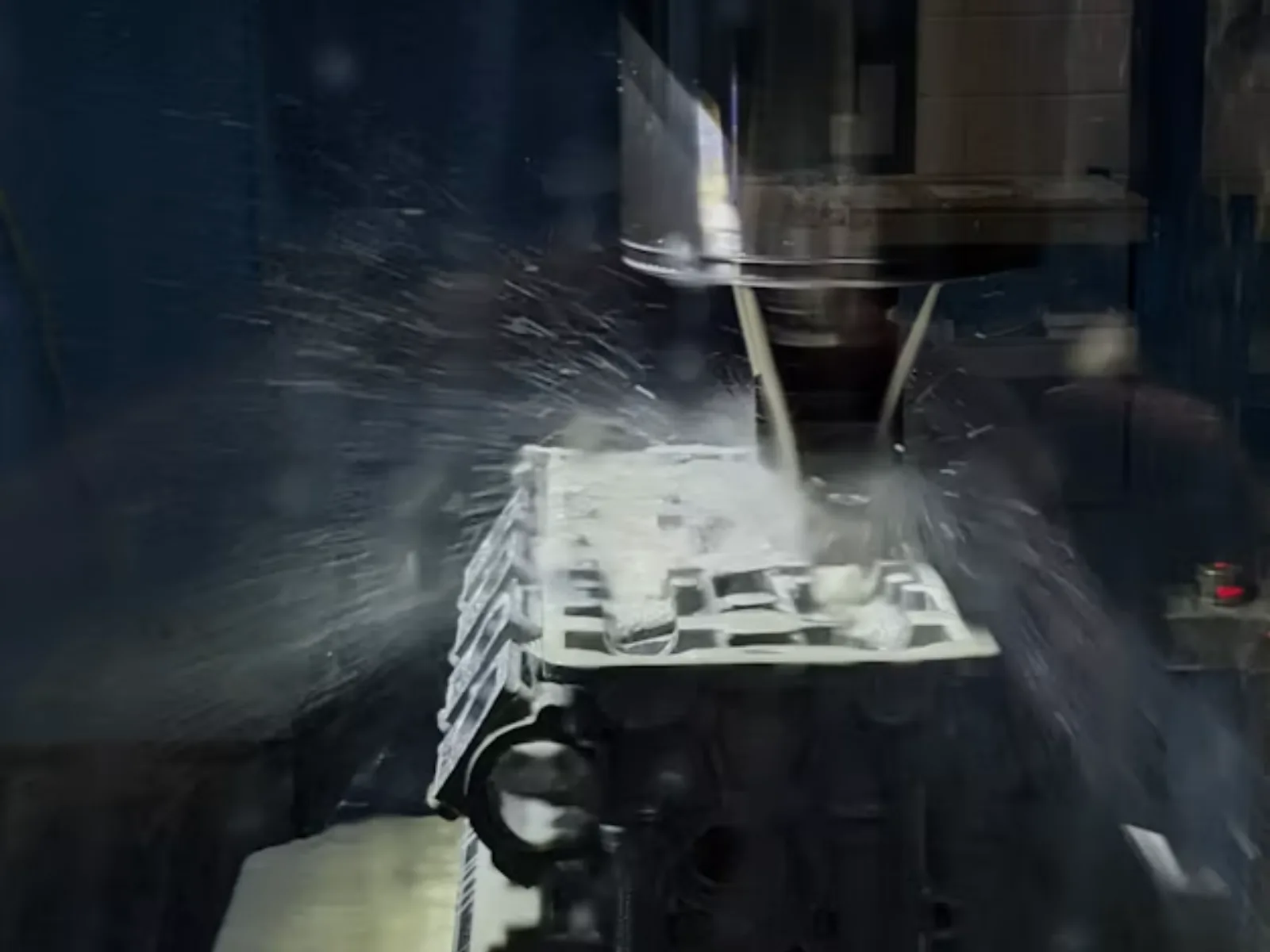
CNC machining centre with coolant working an engine block
02
02 / 04

Engine and transmission machining

The problem

Machining centres and transfer lines for blocks, cylinder heads, crankshafts and gearboxes operate surrounded by chips, coolant and oil mist. In the loading area and behind the machine, an optical curtain or scanner gets dirty, trips falsely and stops the line; the usual workaround is to cover the window or bypass the sensor. Meanwhile, the spindle keeps coasting after the stop.

The Fachmann solution
PILZbackbone

PSENradar safety radar: volumetric presence detection up to 4, 5 or 9 m depending on sensor, PLd, Cat. 3, unaffected by dust, steam or lighting conditions. PILZ also specifies it for chips and welding sparks, where an optical sensor cannot sustain availability. It detects the person in the zone and prevents restart while they remain there. The analysis unit connects via PROFINET/PROFIsafe.

IDEM SAFETY

RFID Guard Locking, metal body, IP67: keeps the machining centre door closed with 4000 N until the spindle stops. PLe and tamper-resistant coding.

Featured families
  • PILZ PSENradar radar systems
  • IDEM SAFETY RFID Guard Locking
Standards
ISO 16090-1ISO 13849-1ISO 14119
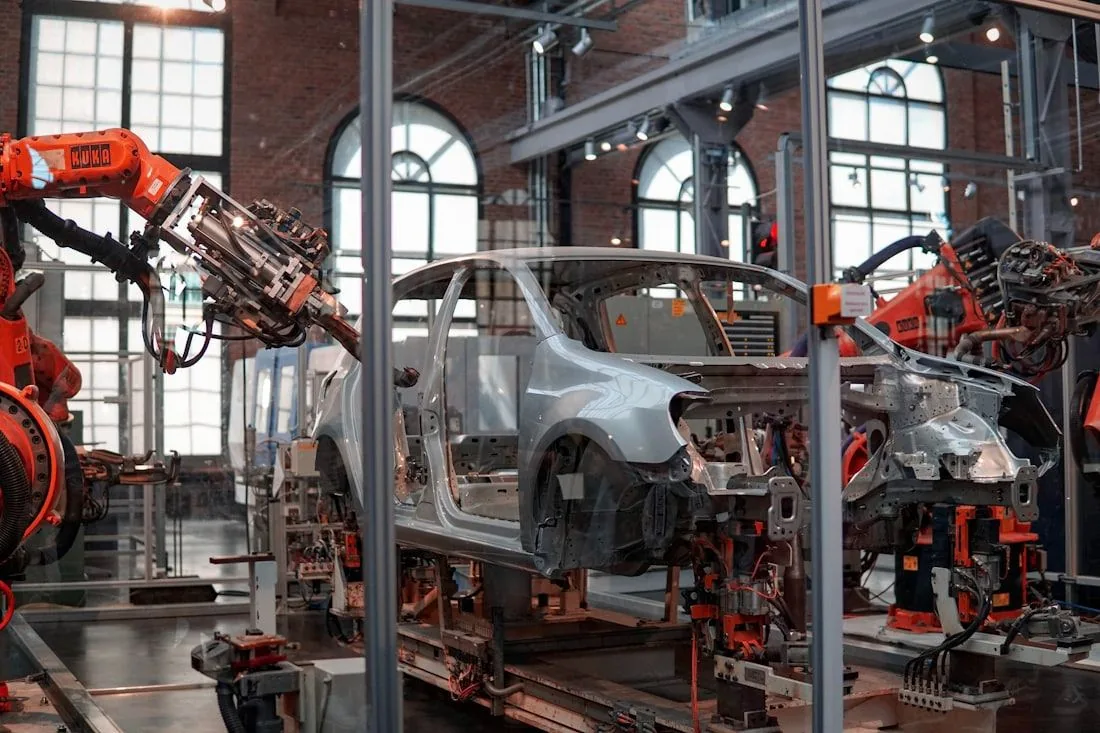
Industrial robot in an automated welding and assembly cell
03
03 / 04

Robotic welding and assembly cells

The problem

In a welding cell, the operator goes in to change electrode tips, correct a weld or remove a part. The biggest risk is not opening the door: it is the cell restarting with someone inside, out of sight of whoever presses reset. A standard door switch gets forced or bypassed with a spare actuator, and the cell loses its safety level without anyone recording it.

The Fachmann solution
PILZbackbone

PSENscan laser scanner (3 or 5.5 m range): monitors the cell floor with 2 protection and 2 warning zones, and up to 10 switchable configurations. If someone is inside, the cell does not restart. PNOZmulti 2 brings doors, scanner and stops together in a software-configurable controller: 20 safe inputs and 4 safe outputs, SIL 3, PLe, with Profinet, EtherNet/IP or Profibus modules to report to the line PLC.

IDEM SAFETYdifferentiator

RFID Guard Locking, metal body: 4000 N holding force, PLe and tamper-resistant coding. Keeps the door locked while the robot moves and cannot be fooled with a spare actuator.

Featured families
  • PILZ PSENscan laser scanners
  • PILZ PNOZmulti 2 configurable relays
  • IDEM SAFETY RFID Guard Locking
Standards
ISO 10218-2ISO 13849-1ISO 14119ISO 13855
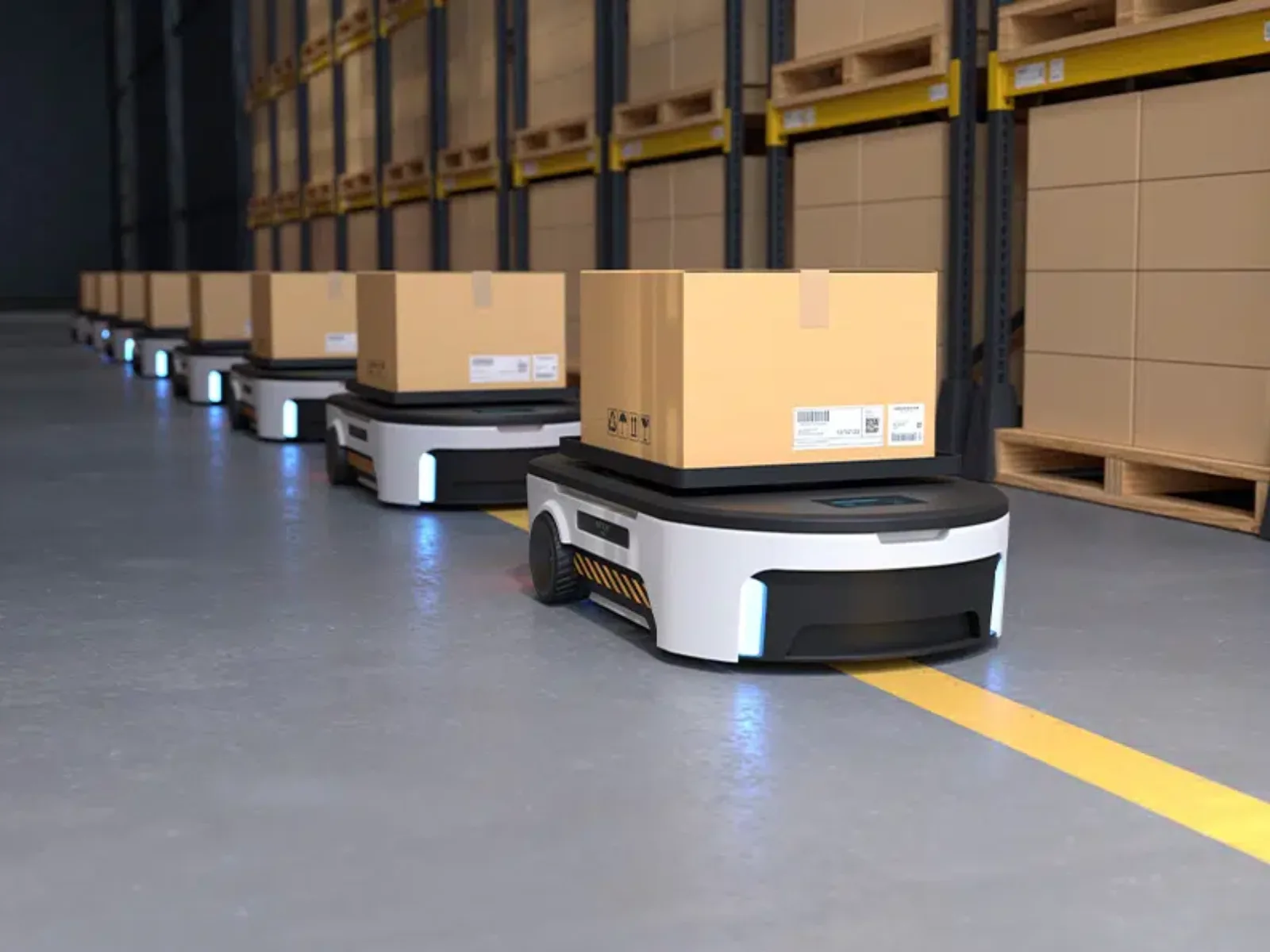
AGVs carrying boxes along a marked warehouse aisle
04
04 / 04

In-plant logistics with AGVs and shared zones

The problem

AGVs, tugger trains and forklifts supply the line through aisles shared with operators. The vehicle must brake before reaching a person, and the detection field must change with speed and route. In welding, painting or parts-washing areas, smoke, steam and sparks cause an optical sensor to trip falsely or stop seeing.

The Fachmann solution
PILZbackbone

PSENscan laser scanner on the vehicle or at the crossing: 2 protection and 2 warning zones, with up to 10 configurations switched by speed or route section. Software configuration, without stopping production.

PILZdifferentiator

PSENradar safety radar: presence detection up to 4, 5 or 9 m depending on sensor, PLd, Cat. 3, unaffected by dust, steam or lighting conditions. The analysis unit connects via PROFINET/PROFIsafe.

Featured families
  • PILZ PSENscan laser scanners
  • PILZ PSENradar radar systems
Standards
ISO 3691-4IEC 61496ISO 13849-1
Reference regulatory framework

Referenced
standards.

The safety design rests on the international ISO/IEC framework, which in Argentina is articulated with Law 19.587 on Occupational Health and Safety and its regulatory Decree 351/79, which requires protecting workers from machinery and equipment risks.

ISO 13849-1
Safety-related parts of control systems: Performance Level (PL).
ISO 10218-2
Industrial robots: safety requirements for the application and robot cell.
ISO 14119
Interlocking devices associated with guards: design and selection.
ISO 13855
Positioning of safeguards with respect to approach speeds.
ISO 16092-1
Press safety: general requirements.
ISO 16090-1
Safety of machining centres, milling machines and transfer machines.
ISO 13851
Two-hand control devices: principles for design and selection.
ISO/TS 19837
Trapped key interlocking systems: design and selection.
ISO 3691-4
Driverless industrial trucks (AGV) and their systems: safety requirements.
IEC 61496
Electro-sensitive protective equipment: light curtains, scanners and presence sensors.

Tell us your application.

We help you size the right solution for your plant.

  • A team of experts handles your case
  • We assess the risk and the application before recommending
  • You get the right solution
Step 01 / 05

Let's start with the application

Which machine, process or installation do you need to solve? Five questions, no more.

Begin survey